Basement Spray Foam Insulation
Improve Comfort and Reduce Energy Costs
(289) 270-6032
Basement Insulation in
MILTON, ONTARIO
Basements are in direct contact with the ground and foundation walls that absorb cold year-round. Without insulation, that cold radiates inward and drops the temperature of the entire floor above. In Milton, where winters are long and cold, an uninsulated basement creates comfort problems throughout the home and puts unnecessary load on the heating system.
Why Is Basement Insulation a Priority?
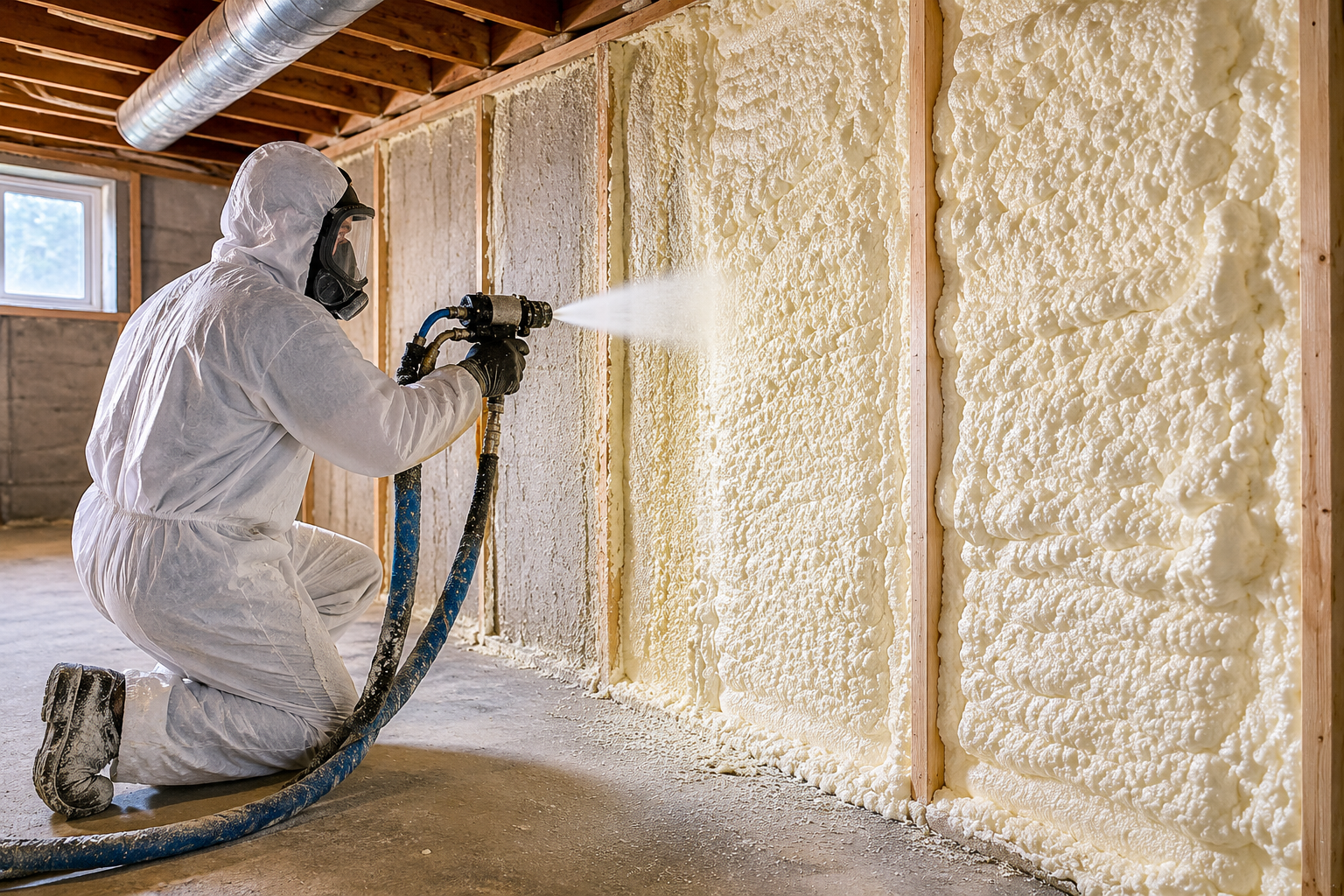
Beyond temperature, basements are vulnerable to moisture. Concrete is porous. Ground moisture moves through foundation walls, creating humidity, condensation, and eventually mould if left unaddressed. Spray foam insulation applied to basement walls addresses both heat loss and moisture in a single step.

How Does Spray Foam Reduce Moisture Problems in Basements?
Moisture enters basements through two main routes: liquid water from cracks and footing drainage issues, and vapour movement through porous concrete. Spray foam addresses the vapour pathway completely. When closed cell foam is applied directly to the interior face of the foundation wall, it creates a continuous barrier that vapour cannot penetrate.
This reduces condensation on cold wall surfaces — a common source of humidity and eventual mould growth in Milton basements. The result is a drier, healthier basement environment that is more suitable for finished living space, storage, or mechanical equipment.
What Parts of the Basement Get Insulated?
Rim joist insulation alone is one of the highest-impact improvements available in older Milton homes. Many homes lose significant amounts of conditioned air through the rim joist area, and spray foam seals it completely.
Should Closed Cell Spray Foam Be Used in Basements?
Yes — closed cell spray foam is the recommended type for below-grade applications like basement foundation walls. Its dense structure resists moisture vapour movement through the foundation wall assembly. Closed cell foam acts as both insulation and a vapour retarder, eliminating the need for a separate poly vapour barrier in many applications.
Open cell foam is not recommended for below-grade walls because it can absorb water if the foundation is wet. In a dry, above-grade scenario inside a basement, open cell can be used on stud walls built away from the foundation, but the foundation wall itself should always use closed cell.
FAQ for Basement Insulation In Milton, Ontario
How Does Spray Foam Reduce Moisture Problems in Basements?
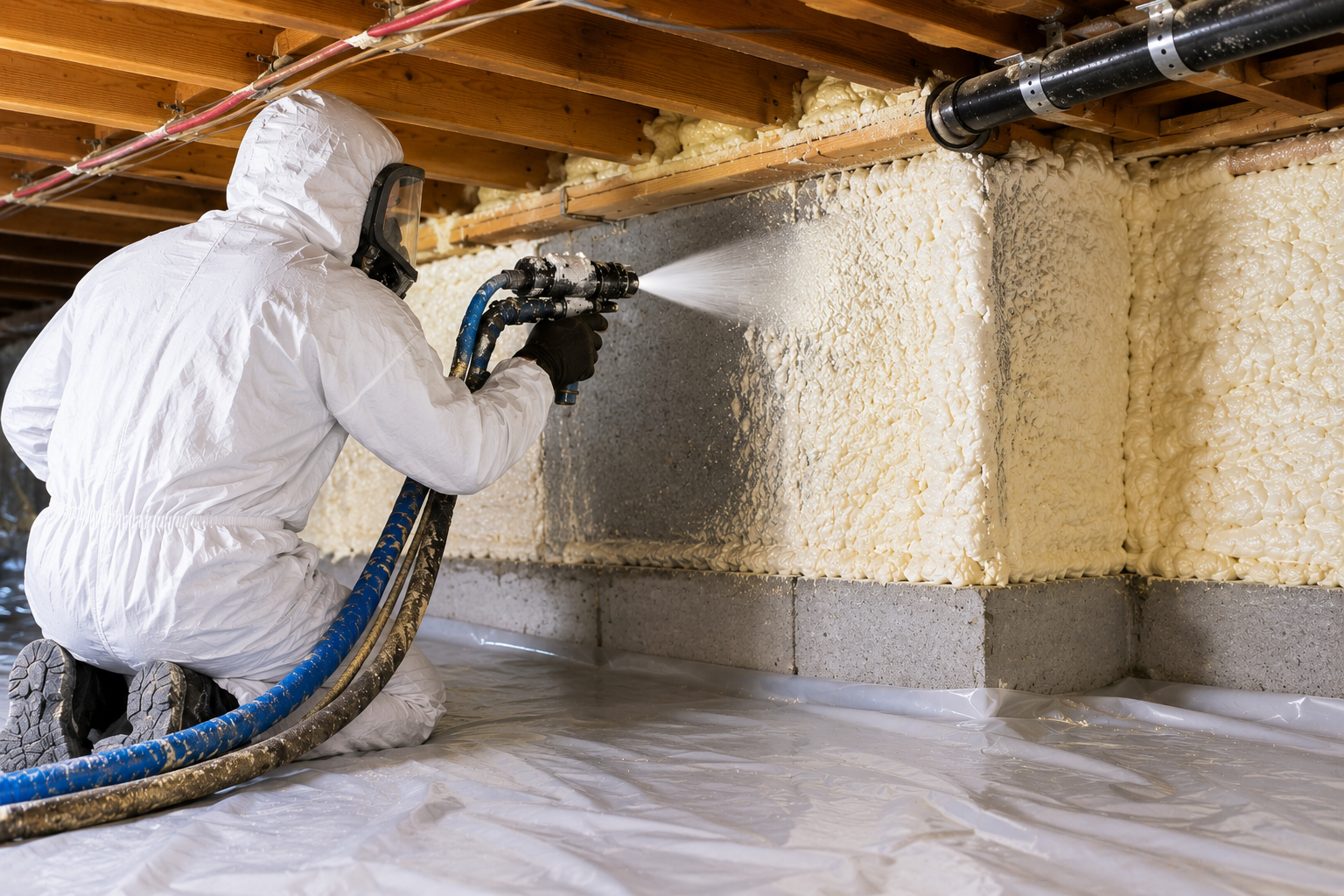
Moisture enters basements through two main routes: liquid water from cracks and footing drainage issues, and vapour movement through porous concrete. Spray foam addresses the vapour pathway completely. When closed cell foam is applied directly to the interior face of the foundation wall, it creates a continuous barrier that vapour cannot penetrate.
This reduces condensation on cold wall surfaces — a common source of humidity and eventual mould growth in Milton basements. The result is a drier, healthier basement environment that is more suitable for finished living space, storage, or mechanical equipment.
What R-Value Is Needed for Basement Walls in Ontario?
Absolutely. Many Milton homeowners apply spray foam to the foundation walls as part of a basement finishing project. The foam provides insulation, air sealing, and vapour control, then stud walls are built inward from the foam surface and drywalled normally.
Ontario Building Code requires minimum insulation levels for basement walls in new construction. The required effective R-value for basement walls in this climate zone is generally R-17 to R-20 or higher depending on the wall assembly. Closed cell spray foam at two to three inches provides an effective R-value in the range of R-12 to R-21 depending on thickness and product.
It also reduces exterior noise from traffic and weather. Homeowners in Milton near busy roads often find that spray foam garage insulation dampens road noise entering from the garage side of the home.
In general, garage insulation costs average between $3 and $7 per square foot. The final price will also depend on the type of spray foam being installed, as open-cell spray foam is generally more affordable than closed-cell spray foam while still offering strong insulating performance and air sealing benefits.
Can Spray Foam Be Applied to an Existing Finished Garage?
In many cases, yes. If garage walls are already drywalled, spray foam may be applied to exposed framing sections, rim joists, and the attic or ceiling space above before re-drywalling. If access to wall cavities is limited, other options can be explored during the assessment.
New garage construction and renovation projects are the easiest to insulate because framing is open and accessible. If you are building a new garage or doing a major renovation, spray foam during the framing stage is highly recommended.
Should Closed Cell Spray Foam Be Used in Basements?
Yes — closed cell spray foam is the recommended type for below-grade applications like basement foundation walls. Its dense structure resists moisture vapour movement through the foundation wall assembly. Closed cell foam acts as both insulation and a vapour retarder, eliminating the need for a separate poly vapour barrier in many applications.
Open cell foam is not recommended for below-grade walls because it can absorb water if the foundation is wet. In a dry, above-grade scenario inside a basement, open cell can be used on stud walls built away from the foundation, but the foundation wall itself should always use closed cell.
For homeowners in Milton planning to stay in their home long term, garage insulation with spray foam is a practical improvement that pays for itself over time and adds to the overall appeal and comfort of the property.
How Does Basement Spray Foam Compare to Rigid Foam Board?
Rigid foam board is a common alternative for basement wall insulation. It is cut to fit and held in place mechanically. The joints and seams between boards, around pipes, and at corners are often taped or caulked, but air leakage is still common.
Spray foam eliminates joints entirely. It conforms to pipes, wires, irregular surfaces, and framing details that cut foam boards cannot. The result is a more complete, better-sealed insulation layer with no gaps. For basement foundation walls in Milton, spray foam consistently delivers better long-term performance than rigid board alternatives.
A properly insulated basement is warmer, drier, and less expensive to condition year-round. Our team is experienced with basement insulation projects throughout Milton and the surrounding Halton Region. Contact Milton Spray Foam Insulation for a free on-site estimate.