Close and Open Cell Spray Foam Insulation
Improve Comfort and Reduce Energy Costs
(289) 270-6032
Close and Open Cell Foam
MILTON, ONTARIO
Spray foam insulation comes in two distinct formulations: open cell and closed cell. They are both made from polyurethane, but they behave differently, perform differently, and are suited to different applications. Understanding the difference helps you make the right choice for your specific insulation project in Milton.
What Are the Two Types of Spray Foam Insulation?
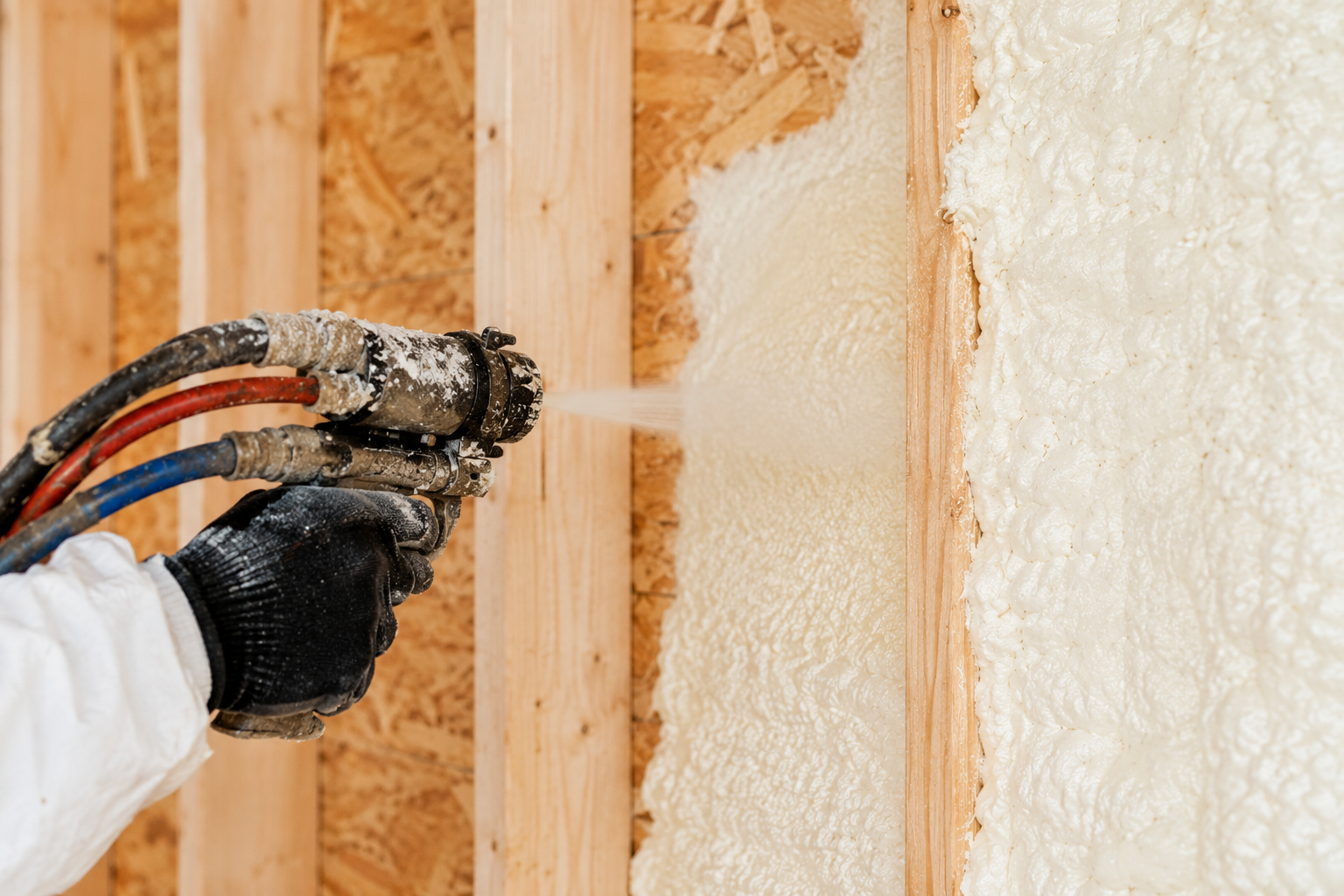
The core difference comes down to cell structure. In open cell foam, the tiny cells within the material remain open after the foam expands and cures. In closed cell foam, those cells are sealed shut, trapping gas inside and creating a much denser, more rigid material.
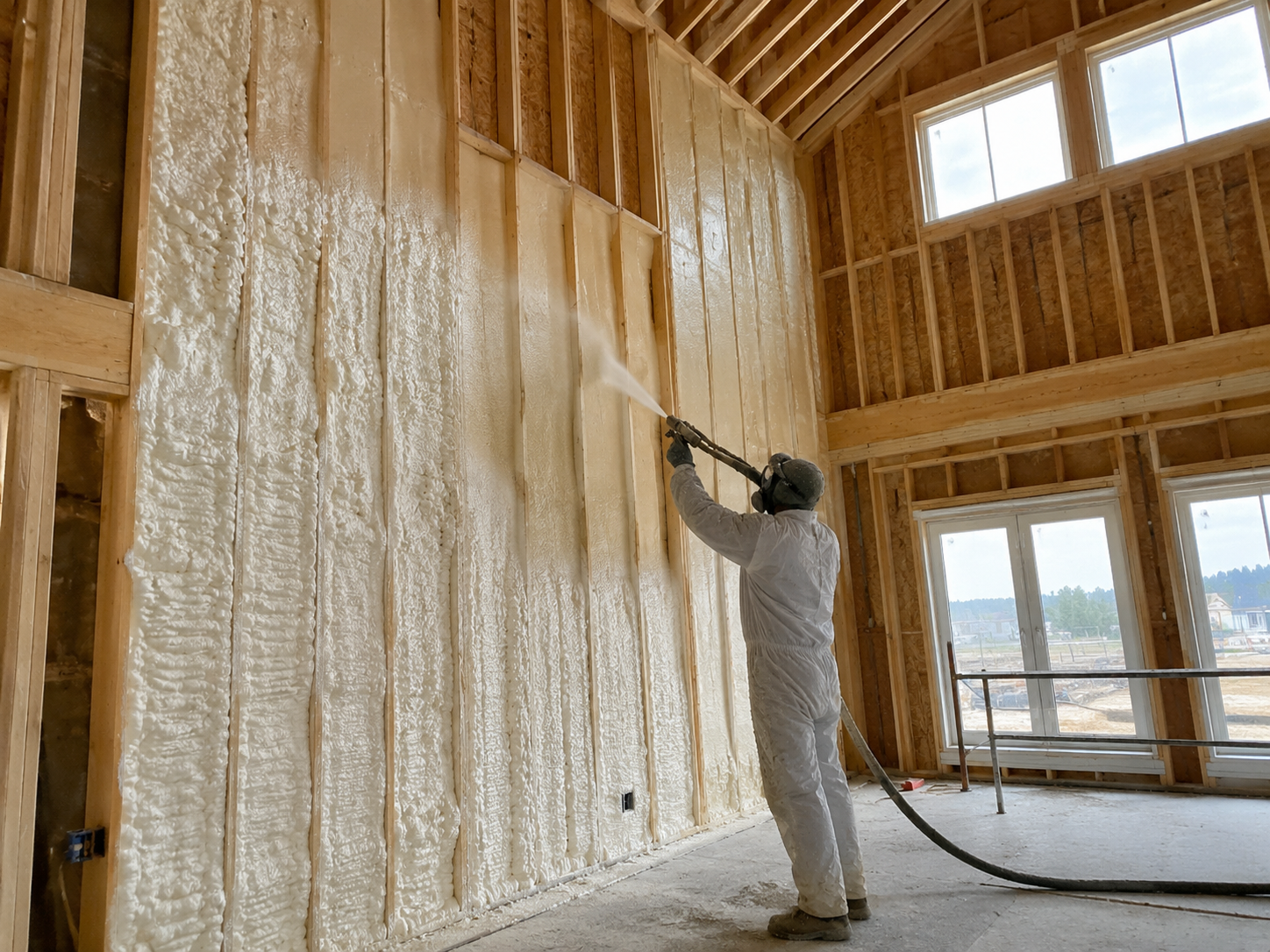

What Is Open Cell Spray Foam Best Used For?
Open cell spray foam is lighter, softer, and less expensive per square foot than closed cell. It expands dramatically after application — filling large cavities with relatively small amounts of material. It is an excellent air sealant and provides solid thermal performance at a lower cost.
Open cell foam is well-suited for:
- Interior wall cavities in above-grade construction
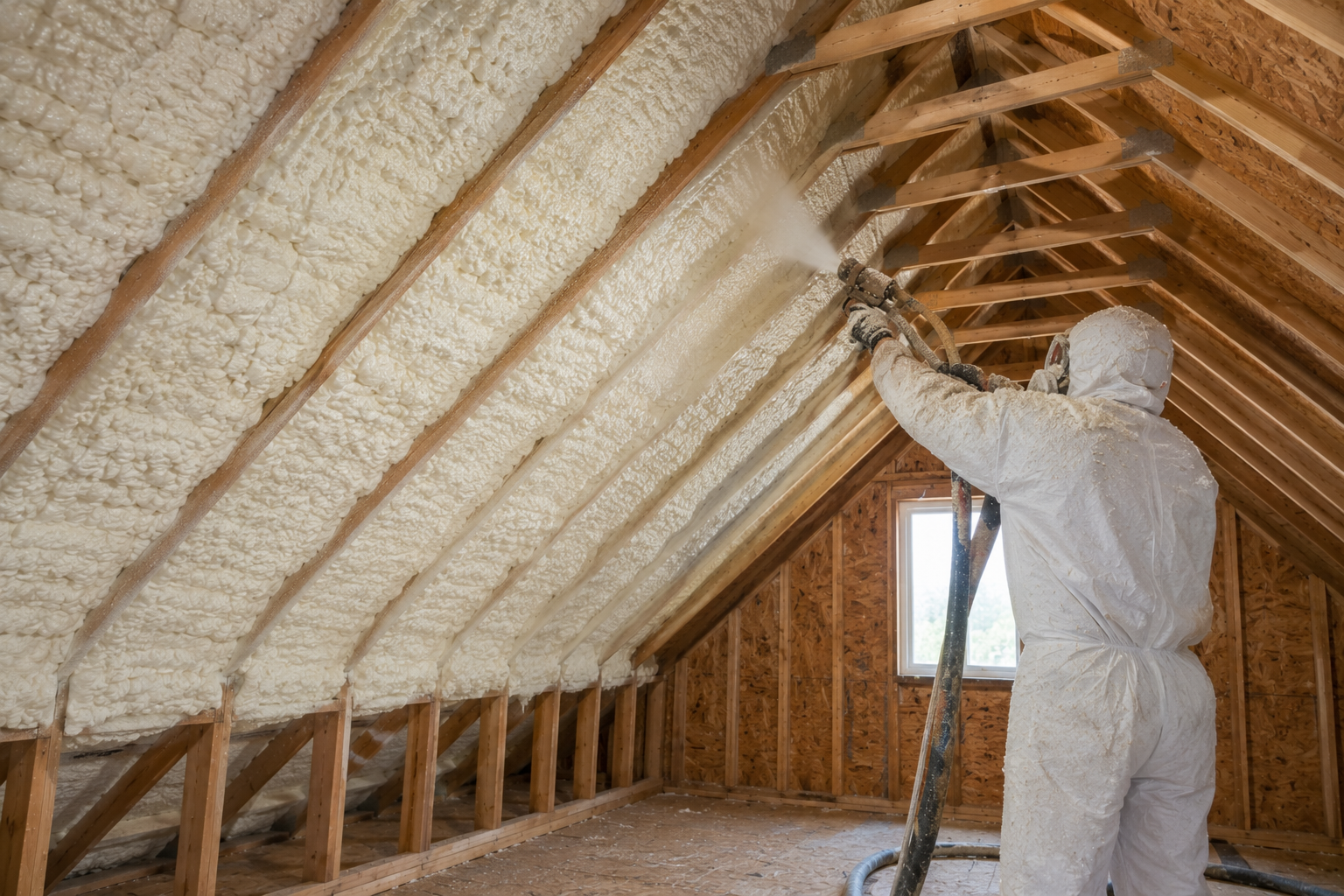
- Attic floor and roof deck applications in vented attic designs
- Sound control between rooms and floors
- Basement ceilings (above-grade surface)
- Garage ceilings where moisture is not a concern
Its R-value is approximately R-3.5 to R-4 per inch — lower than closed cell but adequate for many above-grade applications when applied at sufficient thickness.
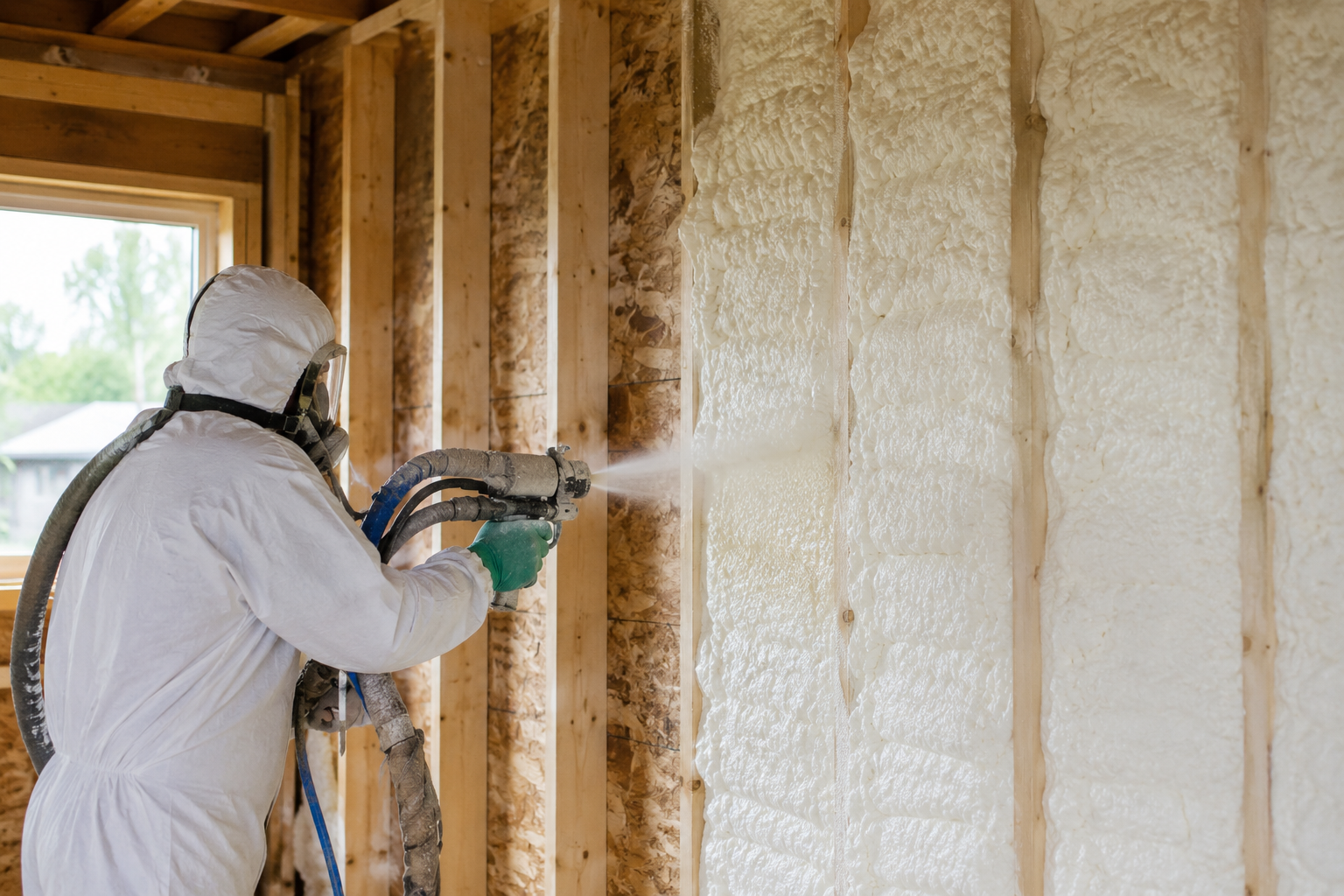
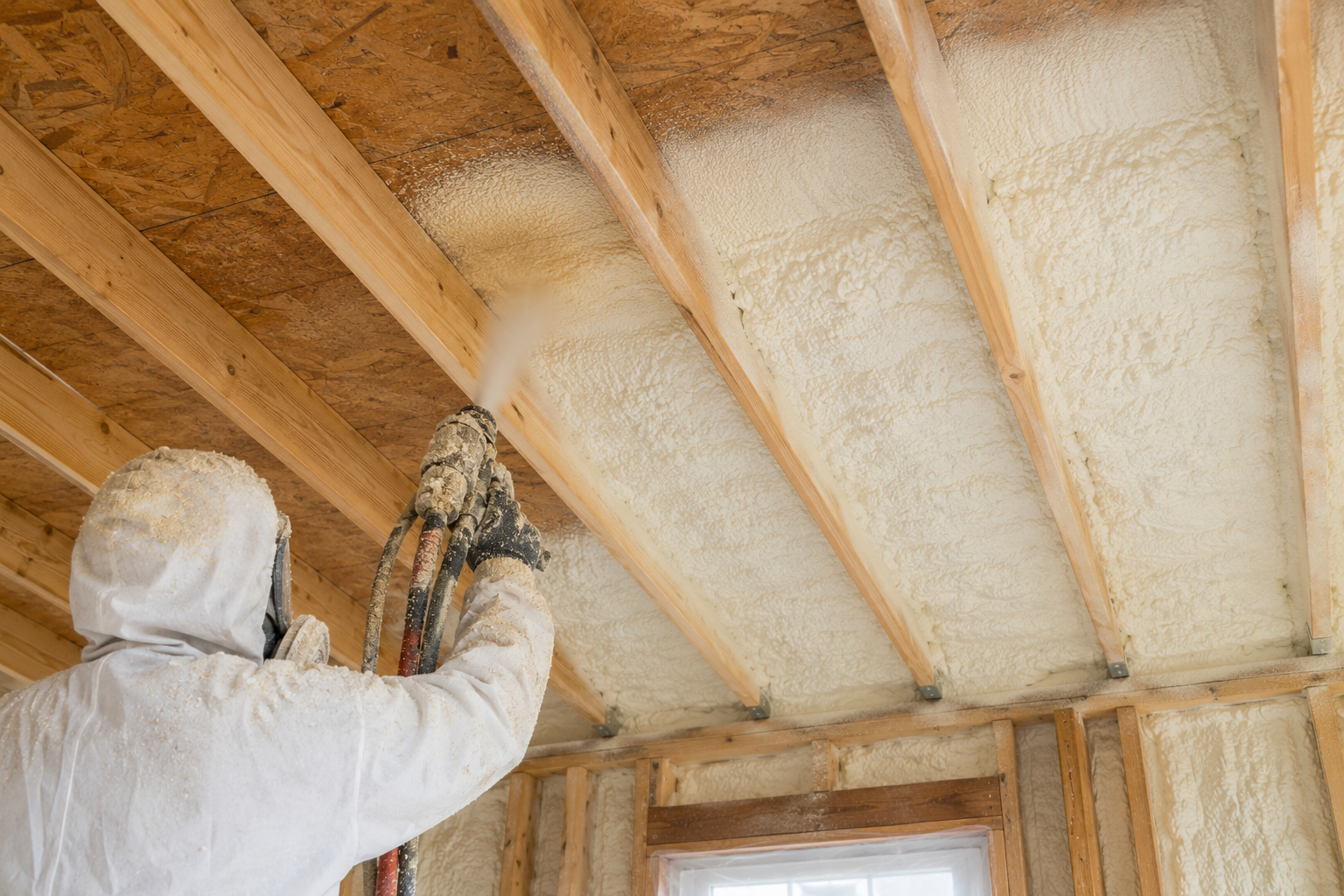
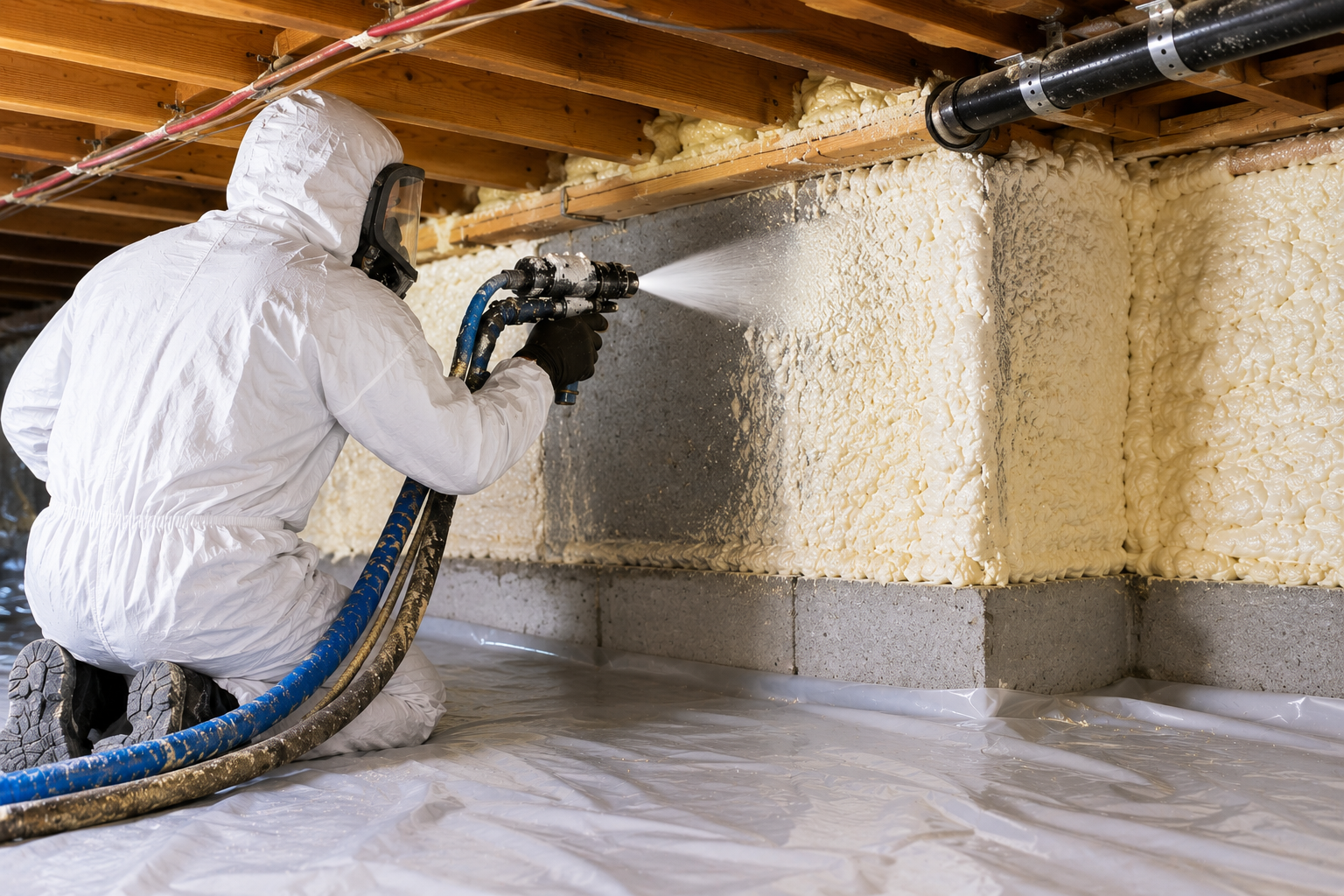
What Is Closed Cell Spray Foam Best Used For?
Closed cell spray foam is denser, harder, and more thermally efficient per inch. Its sealed cell structure makes it impermeable to moisture vapour, qualifying it as a Class II vapour retarder under Ontario building standards. It also adds structural strength to wall cavities when applied at appropriate thickness.
Closed cell foam is the right choice for:
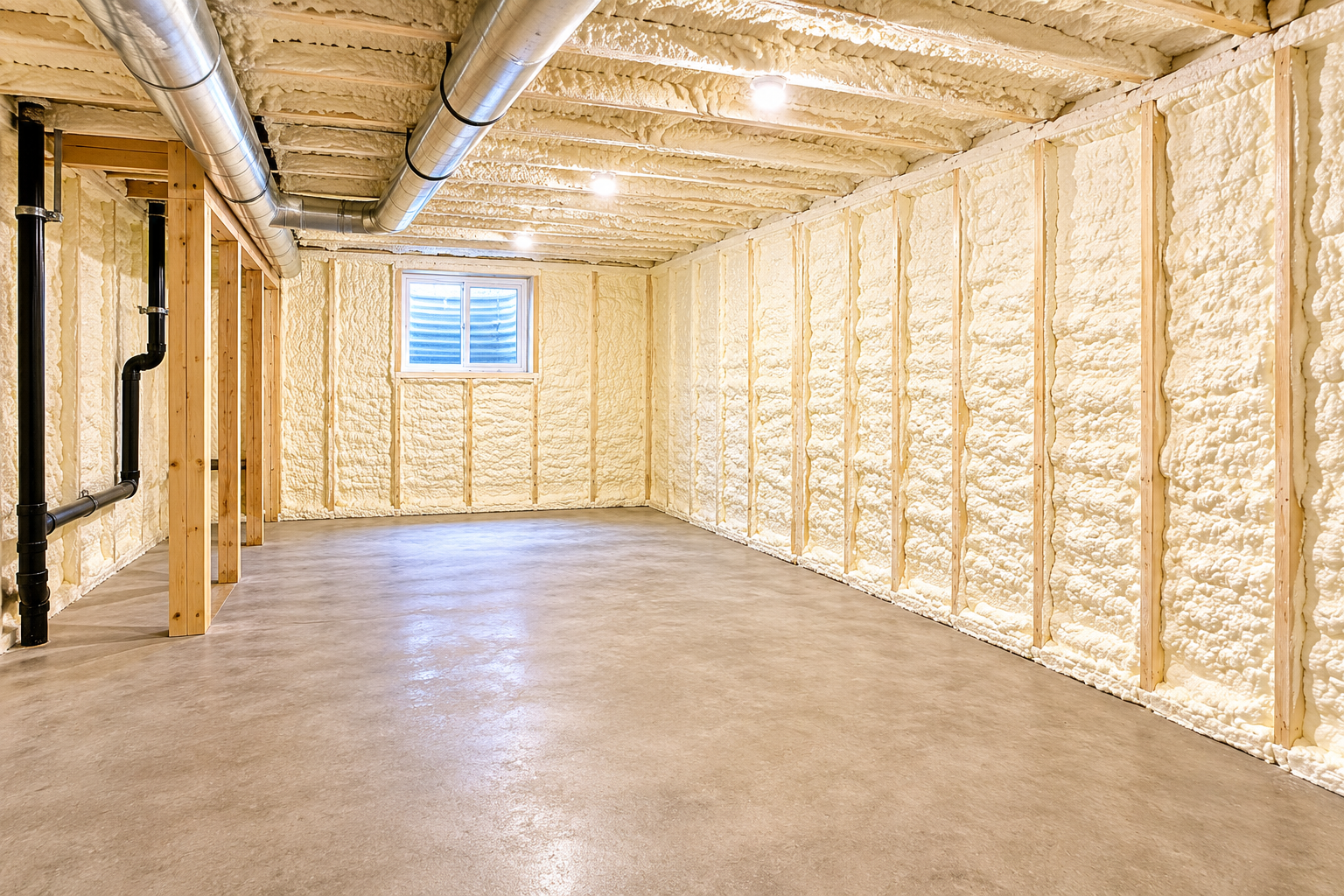
- Below-grade foundation walls and basement perimeter walls
- Crawl space walls and floors
- Rim joists at every floor level
- Exterior-facing garage walls
- Metal buildings and unheated structures
- Applications requiring the highest R-value in a limited thickness
The R-value of closed cell foam ranges from approximately R-6 to R-7 per inch — significantly higher than open cell.
How Do I Know Which Type Is Right for My Project?
The choice between open and closed cell foam depends primarily on the location of the installation and the moisture conditions present. A simple way to think about it:
If the area is below grade, exposed to ground moisture, or requires a vapour retarder — use closed cell.
If the area is above grade, moisture is not a risk, and you need good air sealing and insulation at a reasonable cost — open cell works well.
Many projects in Milton use both types in different areas of the same home. Basement walls get closed cell, while the attic and interior walls get open cell. This combination delivers the right performance where it counts most, without spending closed cell rates on every surface.
Can Open Cell and Closed Cell Be Applied Over Existing Insulation?
In some cases, yes. Spray foam can be applied over certain existing materials, but the suitability depends on what is there, its condition, and the goal of the project. Contaminated, mould-affected, or heavily settled insulation should typically be removed first.
For rim joist upgrades and targeted air sealing in existing Milton homes, spray foam is commonly applied directly to the existing framing and substrate without removing surrounding materials.
Are There Health or Safety Considerations After Installation?
During spray foam application, the chemicals involved require proper ventilation and respiratory protection. Installers use appropriate safety equipment, and the space being sprayed should be vacated during application.
After curing — which typically takes between 24 and 72 hours depending on product and conditions — spray foam is considered safe. Off-gassing drops to negligible levels once fully cured. We follow all manufacturer and industry guidelines for safe installation and re-occupancy.
How Does the Cost Compare Between Open Cell and Closed Cell?
Closed cell foam costs more per square foot than open cell, primarily because it uses more material per inch of coverage and the base chemicals cost more. However, because closed cell achieves higher R-values per inch, you may need less thickness to reach a target R-value in certain applications.
For most projects in Milton, the budget question is answered by the application. Where closed cell is needed for moisture control, it is the correct and necessary product regardless of cost. Where open cell performs adequately, it is the more economical choice.
Choosing the right type of spray foam for each part of your home makes a meaningful difference in both performance and cost. Our team helps Milton homeowners and builders understand the options and recommends the right product for each specific application. Contact Milton Spray Foam Insulation for a free consultation and estimate.