Garage Spray Foam Insulation
Improve Comfort and Reduce Energy Costs
(289) 270-6032
Garage Insulation in
MILTON, ONTARIO
Poor garage insulation can create costly issues over time. If you want to improve comfort and reduce energy costs, insulating your garage is a smart investment. An under-insulated garage can allow outside temperatures to affect nearby living spaces, leading to higher heating and cooling bills, drafts, and energy loss. Upgrading your garage insulation now can help improve efficiency, increase comfort, and prevent more expensive problems in the future.
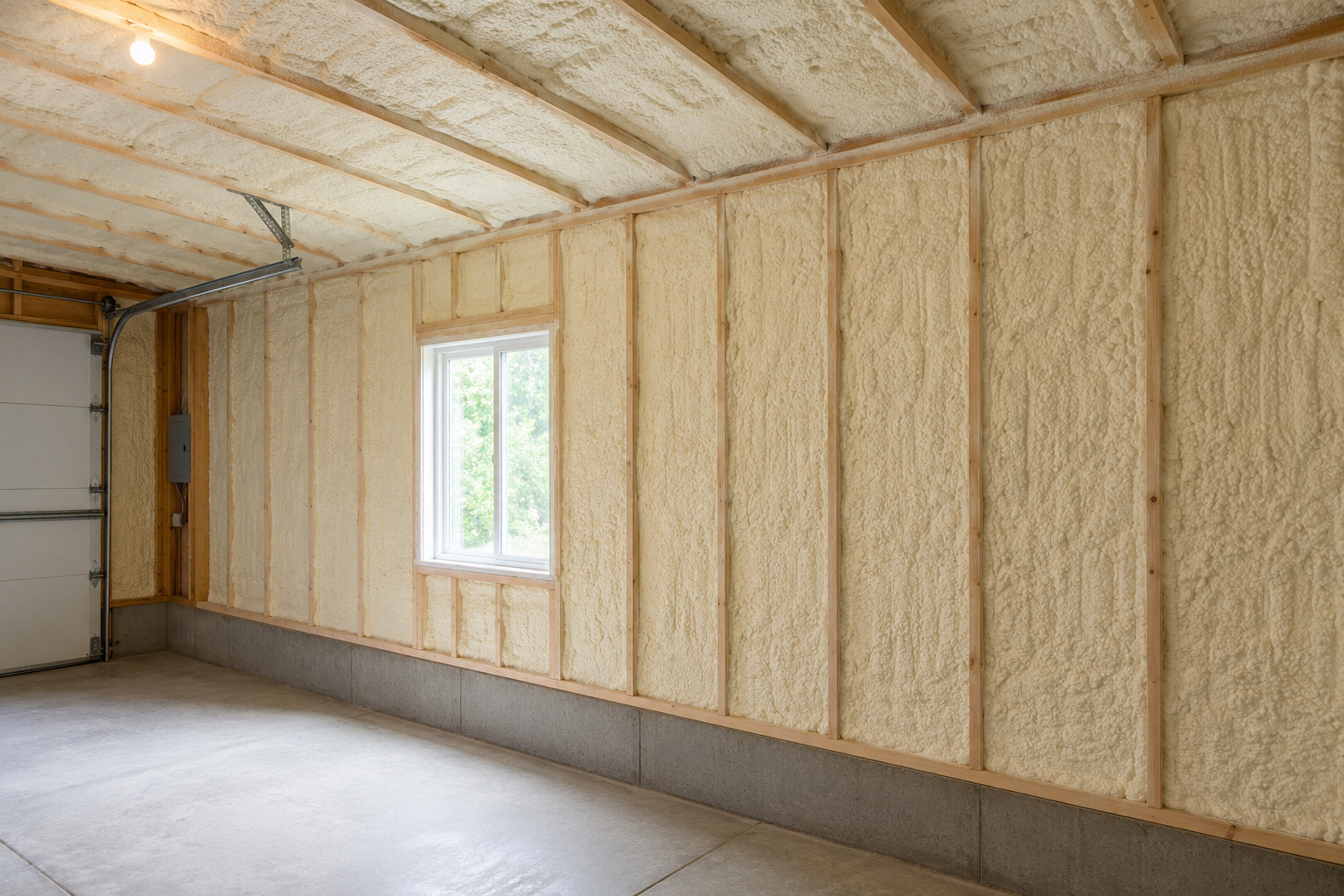
Why Should You Insulate Your Garage?
Garages are often overlooked when it comes to insulation, but they deserve attention — especially in Milton. An attached garage shares at least one wall with your home's living space. When that garage is cold in January or hot in August, those temperatures transfer into your house. An insulated garage reduces that transfer and makes the space itself far more usable.
Even detached garages benefit from insulation. A well-insulated garage stays warmer in winter, which protects vehicles, stored equipment, and any mechanical systems housed inside. If you use the space as a workshop or hobby area, insulation makes it comfortable year-round.

How Cold Does a Garage Get Without Insulation in Milton?
An uninsulated garage in Milton can reach temperatures near or below -20°C on the coldest winter days. The thin steel garage door, uninsulated walls, and no heat source create a space that essentially mirrors the outdoor temperature. Starting a car in a deep-frozen garage puts stress on the battery and engine. Stored paint, tools, and other temperature-sensitive items can be damaged.
With spray foam insulation on the walls and ceiling, a garage retains ambient heat much better. Even without a heater running continuously, an insulated garage in Milton typically stays 10 to 15 degrees warmer than the outside temperature on cold nights.
What Areas of the Garage Should Be Insulated?
Spray foam is ideal for walls, ceilings, and rim joists. Its ability to fill irregular cavities and framing gaps makes it more effective in garage framing than cut-and-fit batts.
Is Your Garage Insulation In Need Of Service?
Your garage can have a significant impact on the comfort and energy efficiency of your home. For homeowners in Milton, professional garage spray foam insulation helps reduce air leaks, improve temperature control, and create a more comfortable space throughout the year. If your garage feels too hot in the summer, too cold in the winter, or allows drafts into nearby living areas, spray foam insulation may be the right solution. Properly insulating the garage can improve energy efficiency, increase comfort, and help make the space more functional year-round.
FAQ for Garage Insulation In Milton, Ontario
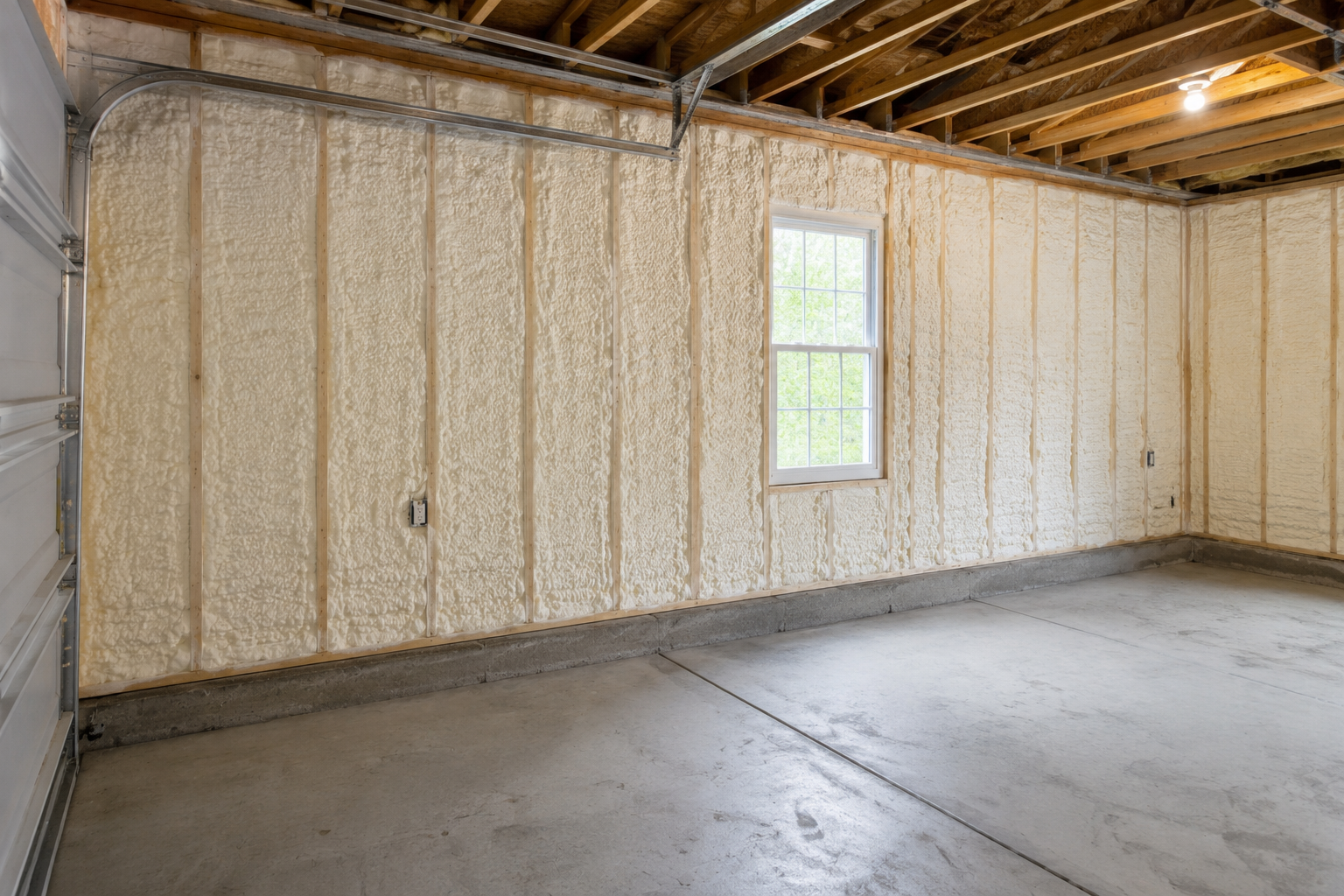
Is Closed Cell or Open Cell Foam Better for Garages?
Both types are used in garages, but the right choice depends on the specific application.
Closed cell spray foam is the better option for exterior garage walls and any surface exposed to the elements or ground moisture. Its vapour resistance prevents moisture from migrating through the wall assembly. It also provides a structural benefit — closed cell foam adds rigidity to wall cavities.
Open cell foam works well for interior partitions, the garage ceiling, and areas where moisture is not a concern. It is softer and provides good sound dampening, which can make a home theatre or bedroom above a garage noticeably quieter.
Does Garage Insulation Help Reduce Noise?
Yes — this is one of the less talked-about benefits of garage insulation. Spray foam, particularly open cell, reduces airborne sound transmission. If your garage is below a bedroom or beside a main living area, insulating the shared surfaces reduces the noise from vehicles, tools, and general activity.
It also reduces exterior noise from traffic and weather. Homeowners in Milton near busy roads often find that spray foam garage insulation dampens road noise entering from the garage side of the home.
In general, garage insulation costs average between $3 and $7 per square foot. The final price will also depend on the type of spray foam being installed, as open-cell spray foam is generally more affordable than closed-cell spray foam while still offering strong insulating performance and air sealing benefits.
Can Spray Foam Be Applied to an Existing Finished Garage?
In many cases, yes. If garage walls are already drywalled, spray foam may be applied to exposed framing sections, rim joists, and the attic or ceiling space above before re-drywalling. If access to wall cavities is limited, other options can be explored during the assessment.
New garage construction and renovation projects are the easiest to insulate because framing is open and accessible. If you are building a new garage or doing a major renovation, spray foam during the framing stage is highly recommended.
What Is the Return on Garage Insulation?
The return on garage insulation comes from multiple directions. Energy savings from reduced heat transfer into the home. Reduced heating costs if you heat the garage. Longer life for vehicles and stored equipment. Improved comfort for year-round use. Lower noise transmission into living spaces.
For homeowners in Milton planning to stay in their home long term, garage insulation with spray foam is a practical improvement that pays for itself over time and adds to the overall appeal and comfort of the property.